Turf Toe Injury: Causes, Symptoms, Treatment, and Recovery Guide
Turf toe injury is a common sports injury affecting the big toe joint. Learn its causes, symptoms, treatment options, and recovery time in this complete guide.
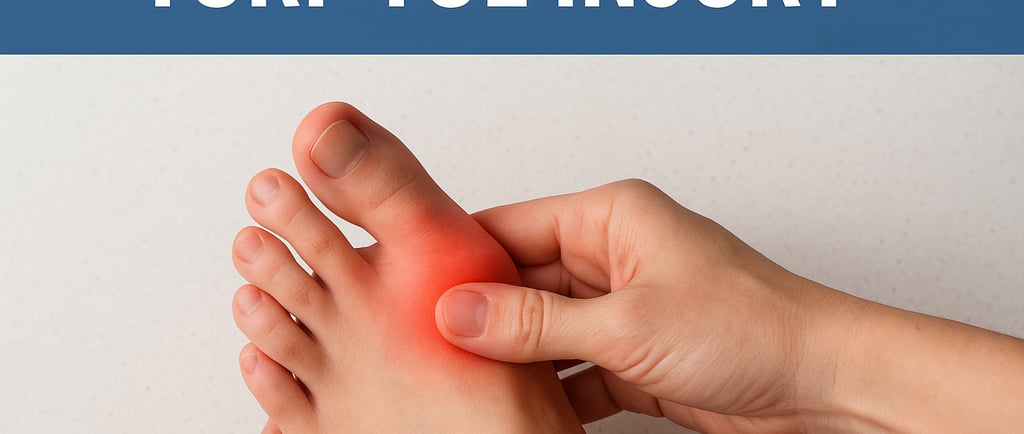
If you’ve ever watched a football game and heard that a player is sidelined with “turf toe,” you might wonder—what exactly is that?
Turf toe is a sprain of the big toe joint, specifically at the base of the big toe where it meets the foot (the metatarsophalangeal joint). It happens when the toe is bent upwards too far, stretching or tearing the surrounding ligaments, tendons, and joint capsule.
This injury earned its name because it’s especially common on artificial turf fields, where athletes push off hard, and the surface doesn’t provide the natural give that grass does. But it’s not just football players—runners, dancers, basketball players, and even gym-goers can experience turf toe.
Causes of Turf Toe Injury
Turf toe usually occurs when the front of the foot stays fixed to the ground while the heel is lifted, forcing the big toe into extreme upward motion. This overstretches the soft tissues supporting the joint.
Why It’s Common in Athletes
Artificial turf: Harder surfaces increase toe stress.
Flexible footwear: Shoes with soft soles provide less protection for the toe joint.
High-impact movements: Sprinting, cutting, jumping, and tackling all put sudden stress on the big toe.
Symptoms of Turf Toe
Recognizing the early signs of turf toe symptoms can help prevent a mild sprain from turning into a long-term problem.
Common symptoms include:
Pain and tenderness at the base of the big toe
Swelling and bruising around the joint
Stiffness or limited toe movement
Difficulty pushing off while walking or running
A “popping” sensation at the moment of injury (in more severe cases)
Turf Toe Severity Grades Explained
Doctors classify turf toe injuries into three grades based on severity:
Grade 1 (Mild): Slight stretching of ligaments, mild swelling, minor pain. You can still move the toe, but it feels sore.
Grade 2 (Moderate): Partial ligament tear, more swelling and bruising, pain when walking. Movements are limited.
Grade 3 (Severe): Complete tear of ligaments or joint capsule. Severe pain, significant swelling, and instability. Walking is very difficult, and athletes may need crutches.
Treatment Options for Turf Toe
Turf toe treatment depends on the severity, but the goal is always to reduce pain, restore movement, and protect the joint from further injury.
1. RICE Method (for mild to moderate cases)
Rest: Avoid running, jumping, or pushing off with the toe.
Ice: Apply cold packs 15–20 minutes every few hours.
Compression: Wrap the toe or use supportive tape to limit motion.
Elevation: Keep the foot raised to reduce swelling.
2. Footwear Modifications
Wear stiff-soled shoes or a carbon-fiber insert to reduce toe bending.
Avoid flexible or minimal footwear during recovery.
3. Physical Therapy
Gentle range-of-motion exercises to restore flexibility.
Strengthening the foot and ankle muscles to support healing.
4. Medications
Over-the-counter NSAIDs (ibuprofen, naproxen) help manage pain and inflammation.
5. Surgery (for severe cases)
Rarely, if ligaments are completely torn or the joint is unstable, surgery may be needed to repair soft tissue and restore function.
Recovery Time: How Long Does Turf Toe Take to Heal?
Recovery depends on the injury grade:
Grade 1: 1–2 weeks with proper rest and care
Grade 2: 4–6 weeks, sometimes longer
Grade 3: Several months, especially if surgery is involved
The person injured should avoid rushing back into play. Returning too soon can cause chronic pain and long-term joint stiffness.
Preventing Turf Toe in Sports
Best Shoes and Turf Considerations
Use shoes with stiffer soles that protect the toe joint.
Add orthotic inserts or carbon plates for extra support.
On artificial turf, choose cleats designed for stability and traction.
Exercises to Strengthen the Foot
Toe curls: Use a towel or resistance band to strengthen toe flexors.
Calf raises: Build ankle strength and stability.
Balance exercises: Improve foot control and reduce injury risk.
Frequently Asked Questions
1. Can you walk with turf toe?
Yes, you can often walk with mild turf toe, but it will be painful. Moderate to severe cases may make walking very difficult. If walking causes sharp pain or you can’t put weight on your toe, see a doctor.
2. How do you know if turf toe is serious?
Severe turf toe often comes with intense swelling, bruising, and difficulty moving the toe. If you can’t bend your toe or it feels unstable, it may be a Grade 3 injury that requires medical attention.
3. Can turf toe heal on its own?
Mild cases (Grade 1) often heal on their own with rest and the RICE method. More severe sprains (Grades 2 and 3) require medical evaluation and may take weeks to months to recover.
4. Is turf toe the same as a broken toe?
No. Turf toe is a sprain of the ligaments and soft tissues around the big toe joint, while a broken toe is a fracture of the bone. Imaging tests like X-rays are used to rule out fractures.
5. What’s the fastest way to recover from turf toe?
The fastest recovery comes from early treatment: rest, ice, supportive footwear, and physical therapy. Avoid rushing back into sports—healing fully is key to preventing chronic pain.
Final Thoughts
Turf toe may sound minor, but for athletes and active individuals, it can be a frustrating and even career-impacting injury. The good news is that with early diagnosis, proper treatment, and preventive steps, most people recover fully and return to their activities without lasting problems.
Protecting your toe joint with the right footwear, strengthening exercises, and allowing enough recovery time are the best strategies to keep turf toe from slowing you down.
Reference: Turf Toe: What It Is, Causes, Symptoms & Treatment